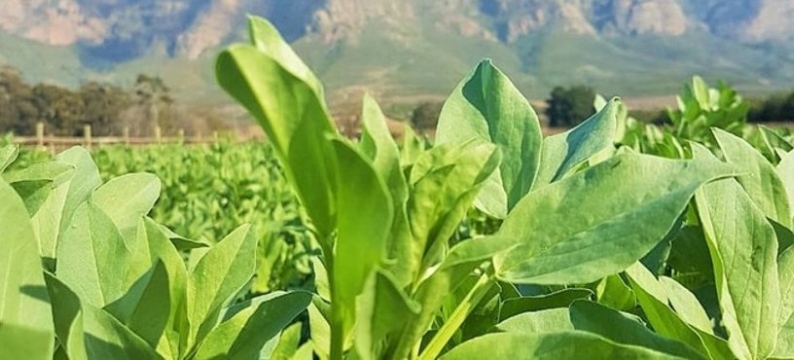
Fiesta | Faba Bean
(Vicia Faba)
The Faba bean plant is tall, erect and multi-stemmed from basal branches.

The Faba bean plant is tall, erect and multi-stemmed from basal branches. It has a well-developed taproot which produces an extensive fibrous root system. Plants can flower profusely, and flowering may last for up to 5 weeks, depending on soil moisture and air temperature. However, as few as 10-20% of flowers produce pods as flowers require cross-pollination.
Faba bean is best suited to well-structured soils in medium to higher rainfall districts. It tolerates some waterlogging, competes well with a range of weeds and is relatively easy to harvest. Faba bean roots need to be inoculated with the appropriate strain of rhizobia (Rhizobium leguminsarium), allowing it to fix nitrogen in the soil. This bacterium will colonise the plants roots, stimulating root nodule development. It should be inoculated when the faba beans are being grown in a field for the first time or where they have not been grown in the past 4 years. Faba beans are used primarily as a cover crop, but it can also be used for silage and pulse production.
Legumes
Legumes drive pasture production by producing nitrogen. They must be carefully inoculated to ensure success. Adequate pasture nutrition is important for maintaining the dominance of improved species in a pasture. Nitrogen is one of the most important elements of pasture nutrition. Protein levels and the digestibility of pastures are improved by legumes, resulting in improved livestock performance.
Specifications
| Name | Value |
|---|---|
| Seeding rate (pure) | 130 -150kg/ha |

Fiesta | Faba Bean